Showing posts with label others-in-the-circle. Show all posts

Tuesday, 22 October 2013

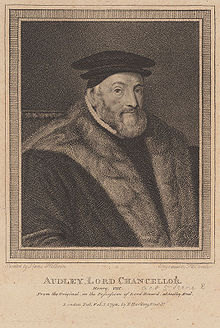
Thomas Audley

1stLordAudley.jpgBorn in Essex in 1488 as the son of George Audley, Thomas Audley was to make his way into the very inner circle of Henry VIII's government. After finishing his law education he became a Justice of the Peace in Essex around 1521. This seemed to have sparked his career in politics for just two years later he represented Essex in Parliament. From here on his career kept rolling.

Cardinal Wolsey took him into his household and in the late autumn 1529 he was appointed Chancellor of the Duchy of Lancaster - that same year he also assumed the title of Speaker of the House of Commons which meant that it was him who held this position when Henry VIII finally broke from Rome. Being a true courtier he soon saw where the wind - or rather the King's will - was blowing and made sure to be on the right side. This meant that he would soon become a key figure in the attacks on the catholic clergy in England as well as one of the minds behind the Act of Succession. For this he was rewarded with no only a knighthood but also the coveted position of Lord Keeper of the Great Seal - it is no surprise that he also supported Henry VIII's marriage to Anne Boleyn. However, Thomas Audley had a habit of changing his colours and could easily adapt to whatever the King's will might be disregarding moral standards - something that would keep his head on his shoulders. That is why it is not surprising that he just a few years later he played a great part in the executions of Thomas More and Bishop Fisher as well as the trial and consequent execution of Anne Boleyn - he was actually present during her execution.

It was also Thomas Audley's hands who drew up the first suggestion for the new Act of Succession before he aided in the death sentences of the rebels of the Pilgrimage of Grace. Then another title was bestowed on him in 1538 when he became Baron Audley of Walden and acted as Lord Steward in three more trials of nobles that would lead to executions. He married twice: first to Christina Barnardiston and second to Elizabeth Grey. It is believed that he was a supporter of the reformation but - of course - still managed to pass Henry VIII's Six Articles of Faith. "Knight of the Garter" was his next title and he would be made one in 1540 shortly before he arranged the attainder that brought about the downfall of Thomas Cromwell. By this time time was running out for Thomas Audley and he must have known. He resigned the Great Seal on 21 April 1544 and died just nine days later.

Thursday, 6 June 2013

Margaret Pole, Countess of Salisbury

Margaret Pole was born on August 14, 1473 to George Plantagenet and his wife, Isabel. Henry VII arranged for her to marry Sir Richard Pole between 1491 and 1494 but the exact year is unknown. The marriage produced five children, one girl (Ursula) and four boys including Reginald Pole, Henry Pole, Arthur Pole and Geoffrey Pole. Sadly Sir Richard died in 1505 and Margaret was left a widow. But before that - in 1499 - Margaret suffered another personal loss when her brother was killed by Henry VII himself in what can only be described as a judicially murder.

Wednesday, 5 June 2013

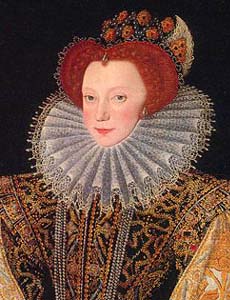
Lettice Knollys, Countess of Essex and Leicester

Lettice Knollys was born in 1540 in Oxfordshire but the exact date is unknown. Lettice's mother, Catherine Carey, was the daughter of none other than Mary Boleyn which made Lettice Elizabeth I's cousin. Very little is known of her childhood and her youth; actually it is not until the reign of Mary I that Lettice's life changed dramatically. Her family had to flee to the Continent to escape Mary's religious persecutions. Luckily for them, Mary's reign was short and the family could return home when Elizabeth became Queen - apparently, they made an impression on the new Queen because Sir Francis Knollys (Lettice's father) was named Treasurer of the Royal Bedchamber and Lettice a maid-of-honour to Elizabeth herself.

If there is one thing that can be said for sure about Lettice Knollys then it must be that she was beautiful. She had naturally red hair and porcelain skin which was the ideal beauty for an Elizabethan woman. This, combined with a natural sense of fashion, caused her to be the centre of attention - something that made Elizabeth I very jealous. She was married off to Walter Devereux and left court to live in her new home in Staffordshire where she gave birth to the couple's five children. Her status was considerably raised when her husband was made Earl of Essex in 1572. While her husband performed his duties in Ireland, Lettice embarked on an affair with Robert Dudley, Earl of Leicestershire. Sadly, her husband never returned home and his death was rumoured to be a result of poisoning.
Lettice was at that time pregnant with Robert Dudley's child and the couple married in secret on September 21, 1578 - apparently, Lettice's father had insisted that they married rather than seeing his daughter give birth to an illegitimate child. When Elizabeth I found out she was furious and banished Lettice from court; she was only to return once. Lettice had given birth to a son - named after his father - but he died at just five years old. In 1584 her husband died as well which threw Lettice into grievance - their marriage is reputed to have been happy. But life goes on and Lettice married Sir Christopher Blount a year later. Elizabeth I still had not forgiven Lettice for her secret marriage to Robert Dudley and remained resentful of her throughout her life.

However, the Queen's strong contempt for the mother did not stand in the way for her son, the Earl of Essex, to become the Queen's last favourite. When Essex attempted to raise a riot Lettice's husband joined in which resulted in his execution in 1601. Lettice would move to Drayton Bassett where she would die on December 25, 1634.

Sunday, 5 May 2013

Richard Rich, Baron Rich

Richard Rich was born in London but exactly when is unknown - sources placed Richard's age as 54 in 1551 which would place his birthday at 1497. His father was Richard Rich (Baron Rich was surely named after his father) and Joan Dingley. We know that he acted as a lawyer in 1516. At the time Cardinal Wolsey was enjoying great power at court which attracted many hopeful young men who wished to advance in the world. Richard was one of these men who wrote to the Cardinal to ask for his patronage. However, it was not Cardinal Wolsey but Thomas Audley who procured the a place as Member of Parliament for Richard in 1529.

Audley's friendship would prove valuable to Richard and in 1533 he was knighted and was given the title of Solicitor General under the service of Thomas Cromwell - this position would mean that Richard would be a part of the demolishing of the monasteries. Rich's legal education meant that he became involved with the trials of both Thomas More and Bishop Fisher - later Richard would also work for the downfall of Thomas Cromwell. It was Richard Rich who went to Kimbolton Castle where Catherine of Aragon had been exiled to. He was to make an inventory of all the ex-Queen's possessions as well as providing Henry VIII with legal advice as to how the King could claim her possessions.

This work for Henry VIII paid off and on April 19 1536 he was made Chancellor of the Court of Augmentations. Of course there was a material up-side as well. The former priory of Leighs was transferred into Richard's possession as well as hundreds of manors in Essex. Richard was a catholic; something he would continue to be during the reigns of the Protestant Edward VI and Elizabeth I. The infamous trial of Anne Askew was closely tied to Richard as well. Along with Chancellor Wriothesley, Richard personally turned the wheels of the rack used to torture Anne Askew.

Richard remained a faithful servant to Henry VIII and would become the first Baron Rich following his contribution to the will of Henry VIII. In March 1547 he became Chancellor. Richard knew where the reins of power would lay after the death of Henry VIII and soon proclaimed his support of Edward Seymour as Lord Protector. He would assist Edward in the prosecution of Thomas Seymour and the strict politics of the Lord Protector. But when the situation became grave in 1549 Richard left court for Warwick. He would see the fall of yet another great man when he presided over Edward Seymour's trial in the last month of 1551 - a month later Richard resigned as Chancellor.
Despite his official resignation of the title of Chancellor Richard still possessed power at court. Being a catholic he gained the favour of Mary I for whom he would aid in the prosecution of Protestants. Richard had a talent for surviving and even remained at a powerful position during Elizabeth I. On June 12 1567, Richard Rich died.

Sunday, 7 April 2013

Cardinal Thomas Wolsey

Thomas Wolsey was born in Ipswich around 1475 to the butcher Robert Wolsey and his wife Joan Daundy. His father provided a good education for Thomas who eventually went to Magdalen College in Oxford. In 1498 he was ordained and was now officially a part of the clergy and from then on his career took off. Just four years later he was the chaplain of the Archbishop of Canterbury who took Thomas with him on diplomatic mission. In 1507 he entered the service of Henry VIII - luckily for Wolsey the King was becoming more open-minded towards people from humble origins.

Henry VIII would be crowned King of England two years later and he took the talented Wolsey with him. Apparently, Wolsey had become very good friends with the King who openly showed his appreciation of Wolsey by making him a part of the Privy council. The two of them had just what the other needed - Henry was not that interested in governmental affairs during his younger years and Wolsey had the skill and interest to take care of that. 1514 saw the elevation of the ordained Wolsey to the title of Archbishop of York and merely a year later there was no doubt that the new archbishop was a force to be reckoned with - Henry chose that year to make him Lord Chancellor when Warham resigned.

Wednesday, 20 February 2013

Thomas Cranmer

Thomas Cranmer was born in 1489 to a family that did not belong to the aristocracy and his family had a modest fortune. When his elder brother, John, inherited the estate after his parents, Thomas was to join the church. At fourteen he was sent to the Jesus College but it took him eight years to finish his education there - a remarkable long time. After Thomas received his Masters of Arts, he married a woman named Joan. But because marriage was not yet acceptable in a priest, he lost his residence at Jesus College and began as a reader at another college. But Joan died during the birth of their first child and the Jesus College gave him his place back.

Tuesday, 19 February 2013

Thomas Culpepper

Thomas Culpepper was born in 1514 and was a distant relation to the Howard family. In 1534 Thomas bought Higham Park and a year later, he was a courtier to Viscount Lisle.

Culpepper was described as being handsome and quickly became a favourite of Henry VIII. Other courtiers would often bribe Culpepper to use his influence with the King on their behalf. But Thomas Culpepper also had a darker side. He was accused of raping a gate-keeper's wife and then killing the gate-keeper when he came to demand justice - it has been argued whether it was Culpepper or his elder brother, who also happened to be named Thomas. Whichever brother it was, a pardon was given from Henry VIII.
Painting of Thomas Culpepper
made after his death

Monday, 18 February 2013

Henry Howard, Earl of Surrey

Born as the eldest son of the Duke of Norfolk, Henry Howard was privileged from the very beginning. Actually, Henry Howard was a descendant of kings on both his maternal and paternal side: King Edward I on his father's side and King Edward III on his mother's side. He was born in the time around 1517.

Henry Howard was placed at Windsor with Henry Fitzroy (the illegitimate son of Henry VIII) and became quite close friends with the King's bastard son. Henry inherited his father and grand-father's military skills and was renown as a very good soldier who became "Lieutenant General of the King's Land and Sea".
But the privileged Henry Howard had a temper. Once he was arrested for striking another courtier and was arrested again after having walked through a town, breaking the windows of the sleeping inhabitants. But every time King Henry VIII came to his rescue.

Saturday, 16 February 2013

Edward Seymour, Duke of Somerset

Edward Seymour was born in around 1500 and would be the brother of Queen Jane Seymour. When he was 14 he received an appointment in the household of Mary Tudor.
Edward married twice; his first marriage to Catherine Fillol was annulled due to her adultery and his second marriage was to Anne Stanhope in the time before March 9th 1534.

When Jane Seymour became the third wife of Henry VIII, Edward was created first Viscount Beauchamp on June 5th 1536 and Earl of Hertford in October 1537. He was sent to the Scottish border to "teach the King of Scotland a lesson" on behalf of Henry VIII - a task he carried out with extreme ruthlessness. Even after the death of his sister Edward remained in high favour with Henry VIII which turned out to last even beyond this Tudor-king.

Friday, 15 February 2013

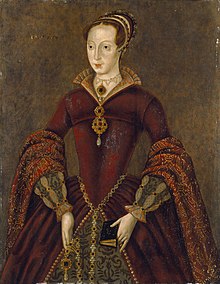
Lady Jane Grey

Lady Jane Grey was the eldest daughter of Henry Grey (Duke of Suffolk) and Lady Frances Brandon. She had royal blood in her veins through her mother who was the daughter of Mary Tudor, Queen of France. It is assumed that she was born between 1536-37. Jane grew up with her two sisters, Lady Catherine Grey and Lady Mary Grey.

Jane received a good education, learning both Latin, Greek, Hebrew and Italian. Through her childhood and education she became an ardent Protestant. Jane was fond of book-studies and would prefer to study rather than attend a hunting-party. Jane was sent from home in February 1547 to join the household of Thomas Seymour and stayed with him during his marriage to Catherine Parr. She only left after Catherine's death. After the funeral of Catherine Parr - in which Jane acted as chief mourner - she stayed at Thomas Seymour's house again. However, she moved a few months before he was arrested.

Jane was betrothed to Lord Guildford Dudley in the spring of 1553 who was the son of the Duke of Northumberland. The couple was married on May 21st.

Charles Brandon, Duke of Suffolk

Charles Brandon was born in around 1484 to Sir William Brandon and Elizabeth Bruyn. He is mainly remembered as Henry VIII's closest childhood friend and consequently spent most of his childhood at court during Henry VII's reign. His first appointment of any influence was that of Master of the Horse in 1513. Furthermore he was created Viscount Lisle after he was betrothed to Elizabeth Grey but when she came of age she refused to marry him and he then had to give up the title.

Charles became noticed after his successful sieges during the French campaign in 1513. Henry VIII tried to get Margaret of Savoy to marry Charles and made him Duke of Suffolk for the same purpose. At the Field of the Cloth of Gold in 1520, Brandon was present at was still in high favour with the King and was even sent to Calais to lead the English troops there just three years later.
When Cardinal Wolsey fell from power, Suffolk immediately found his influence growing on a daily basis. He was acting as High Steward at Anne Boleyn's coronation and was - against his will - send to disband Catherine of Aragon's household (something he found very uncomfortable).

Thursday, 14 February 2013

Thomas Cromwell

Thomas Cromwell was born in around 1485 but very little is known of the life of Thomas when he was young. He was the son of Walter and Katherine Cromwell and spent his childhood at his birthplace in Surrey.

Thomas left England and set sail for continental Europe, where records show that he spent time in Italy, France and the Low Countries. There have been many stories of what Thomas did while visiting these countries but they are often contradictory. Thomas would return to England and marry Elizabeth Wyckes in 1515 with whom he had two daughters and one son.

By 1520 (just five years after his return to England) he was already well-known the mercantile and legal circles of London. He even gained a seat in the House of Commons but nothing of that period has survived. Cromwell was apparently skilled because in the middle of 1520's he joined the service of none other than Cardinal Wolsey. Within long he had participated in the dissolution of almost thirty monasteries to raise money for schools build by Wolsey and must have made an impression on the Cardinal for by 1529 he was one of Wolsey's most trusted advisers - however the Cardinal fell from power later that year.

Monday, 11 February 2013

Mary Boleyn, The Other Boleyn Girl

As with her infamous sister, Anne, it is unknown exactly when Mary was born. We do know that Mary was born at Blickling Hall and spent her childhood at Hever Castle with her siblings Anne and George.
It has been suggested that she was the eldest of the three Boleyn siblings because her grandson (Lord Hunsdon) claimed the title of Earl of Ormonde on the grounds that the title belonged to him since he was a descendant of the eldest Boleyn heir. Furthermore she married first - which is normally reserved for the eldest girl. But there are no actual evidence that can tell us which sister was the eldest.

Jane Parker, Lady Rochford

The infamous Lady Rochford was born as Jane Parker in around 1505. Her family was wealthy, well-connected and had a good reputation; Jane herself was distantly related to Henry VIII. Jane was sent to court before she was fifteen and she joined Catherine of Aragon's household. We know that she went with the King and his family to the Field of the Cloth of Gold. Later she was a one of the seven graces - alongside her future sisters-in-laws Mary and Anne Boleyn - at the masquerade Chateau Vert.

Sunday, 10 February 2013

Bessie Blount

Elizabeth Blount was the daughter of Sir John Blount and Catherine Pershall. Sir John Blount was very loyal to the royal family and rather unremarkable but still accompanied the King to France in 1513. We do not know much of her early life except that she was rumoured to be beautiful.

Bessie (nick-name) served as a maid-of-honour to Catherine of Aragon. She soon caught the eye of the King and became his mistress in around 1514-1515. History remembers Bessie Blount mostly because of the son she gave birth to whose father was none other than Henry VIII. Henry Fitzroy was the only son of Henry VIII that he acknowledged despite the child's illegitimacy. But the son was soon created Duke of Richmond and Somerset and Earl of Nottingham - these titles clearly show how excited Henry was to have a living son even though it was not with his wife.

Katherine Ashley

Katherine "Kat" Ashley née Champernowne was born in 1502. We do not know with certainty who her parents was but it is generally accepted that her father was Sir John Champernowne of Dartington and Margaret Courtenay.

Katherine was appointed governess to the Lady Elizabeth after her former governess - Lady Bryant - was transferred to Prince Edward's household. Elizabeth would refer to her as "Kat" for the rest of her life. At first Lady Elizabeth was too young to have a governess which meant that Katherine's original title was a waiting gentlewoman to the young Princess. When Elizabeth reached her fourth birthday Katherine was made governess.

Will Somers - The King's Fool

Will Somers is the best-known court jester of the fun-loving Henry VIII. The fool's road to the court began at his birth in Shropshire where he was noticed by Richard Fermor who presented him to Henry VIII in 1525. The King immediately liked Will Somers and offered him the post of court jester. The reason for why we know most about Will Somers is that his liberalities was recorded by different courtiers and has survived till today.

Engraving of the royal jester
The King was very fond of his fool and Somers showed his loyalty by remaining in the King's service till the very end of Henry's life. In later years when the King's ulcer on his leg was causing him immense pain, Will Somers was the only one who could make the King smile.

Saturday, 9 February 2013

Anne Stanhope, Duchess of Somerset

Anne Stanhope was born in around 1510 at Sudeley Castle. Not much is known of her childhood other than she was the daughter of Sir Edward Stanhope and Elizabeth Bouchier; she also had two half-brothers from her father's previous marriage.