Showing posts with label royal-houses. Show all posts

Friday, 30 August 2013

Greenwich Palace

Built in 1477 Greenwich Palace is also known as the Palace of Placentia - a name given by Henry VIII which means "the Palace of Pleasure". It was first the property of Henry V who gave this little present to his brother, the Duke of Gloucester. In 1499 Henry VII was on the throne and had the palace expanded using no less than 600,000 red bricks - all produced in England of course. A favourite of the Tudors it was also known to be the most modern palace of its' time so of course the royal Tudors spent a lot of time here. By the time the Tudors inhabited the palace it was located quite a bit outside of London and close to the Thames because it was easier to travel by water than by the roads which were often muddy.

Henry VII added three large courtyards around 1500 and also had a hunting park of 200 acres. Henry VIII also added a tiltyard measuring 650 x 250 feet! Also, two octagonal towers overlooked the tiltyard making it perfect for great displays.

It was the birthplace of no less than four Tudors: Henry VIII, Edmund Tudor, Elizabeth I and Mary I. Henry VIII was baptised in the church of St. Alfege and Elizabeth I was baptised in the church of the Observant Friars which was just close by. But there is also a more sinister story concerning the Tudors and Greenwich. Henry VIII married Catherine of Aragon as well as Anne of Cleves in the chapel. It was here that Anne Boleyn was staying when she was arrested and taken by barge to the Tower of London. Later on Anne Boleyn's death warrant was signed by Henry VIII here.

Henry VIII loved this palace nonetheless - apparently he never thought of the terror his previous wives had felt there - and made it his favourite residence until Whitehall and Hampton Court Palace became all the rage. But while he stayed there Henry had the place expanded again to accommodate his need of entertainment: a jousting area, a cock pit, tennis courts, kennels for his hunting dogs and stables. But that was not all. A new banqueting hall, forges and armoury was also added.

Ironically enough it was at the jousting grounds of Greenwich that Henry VIII had his jousting accident that left him unconscious for two hours - he would never joust again. Elizabeth I spent most of her summers at Greenwich and it is allegedly where Walter Raleigh is said to have put his cape over a puddle for the Queen. When Mary Tudor had married Charles Brandon - without her brother's permission - the palace was were the marriage was solemnized and made public.

The sad thing is that Charles II had the Tudor parts torn down to built his own sumptuous palace.
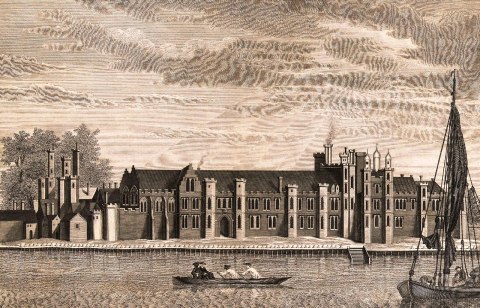
The Palace of Placentia during Tudor Times
Greenwich during the Tudors

Anonymous painting of Greenwich Palace during the reign of Henry VIII. [Wiki]

20130213-225921.jpg
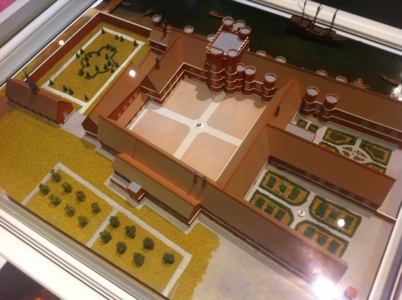
Model of the palace during the Tudors

20130213-225943.jpg


Saturday, 29 June 2013

Hatfield House

Hatfield House as it stands today was completed in 1611 - that is after the death of Elizabeth I. But the old castle played an important part in the royal Tudor's life.
It was build in 1485 - the same year that Henry VII became King - by John Morton, the Bishop of Ely. The Banqueting Hall is the main remainder of the old palace.

It was one of the many houses owned by Henry VIII (he bought it in 1538) who used it to house Prince Edward, Princess Mary and Princess Elizabeth. But it was Elizabeth who has the greatest connection to the place. Her childhood there was happy and she would participate in her younger brother's education. However, when Mary I became Queen Hatfield House was transformed into a "country prison" for the threat that was Elizabeth. While staying there in 1558 she was informed that her sister had died and that she was now Queen of England.
The famous Rainbow Portrait of Elizabeth I is stored at this house and is one of the greatest examples of Tudor iconography. The portrait was painted when the Queen was in her later years but she appears as young as ever - it was to give the impression that she was immune to ageing. The text "Non Sine Sole Iris" means "No Rainbow Without the Sun"; the sun being Elizabeth which is another attempt at signifying her importance.


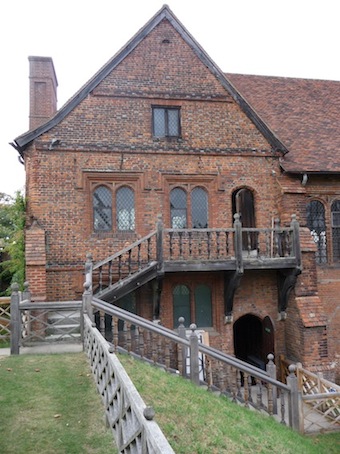
The Banqueting Hall - still as Elizabeth would have seen it
The Rainbow Portrait proudly on display in the Marble Hall

Monday, 11 February 2013

Eltham Palace

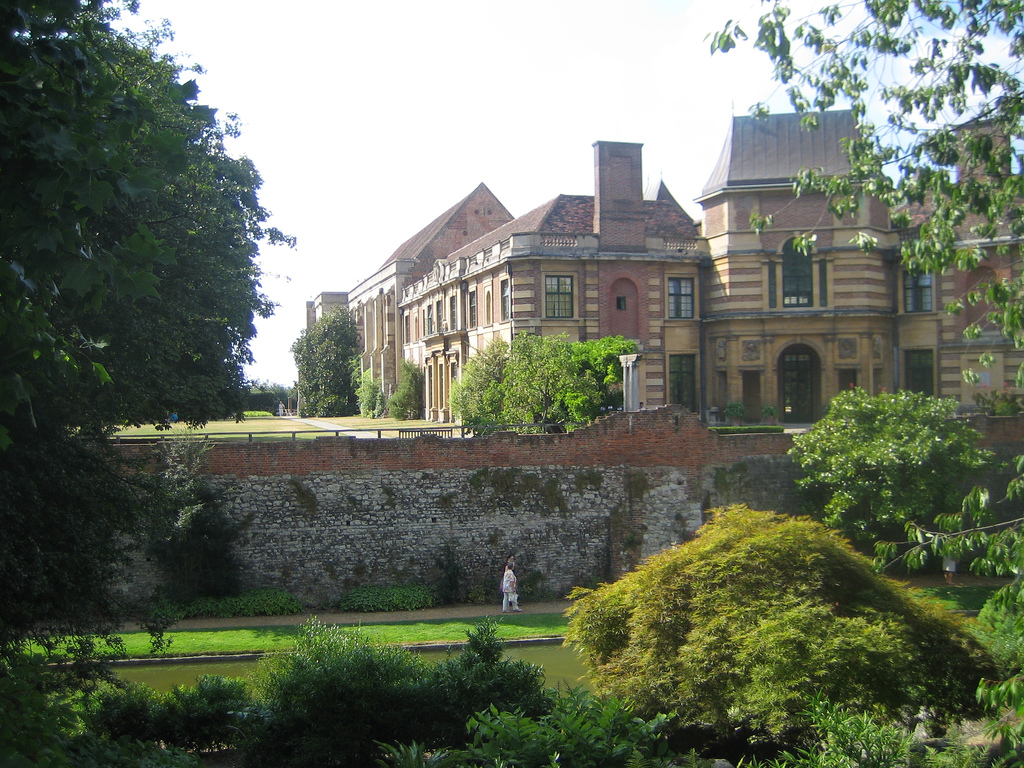
Henry VIII grew up within Eltham Palace and met Erasmus here in 1499. The Tudor court generally used the palace for Christmas celebrations but when Greenwich Palace was rebuild the court used Eltham less. But the large parks and forests were still used for hunting when the court stayed at Greenwich.

Anne Boleyn left her mark on the palace as well, having her emblem inserted in the glass in the gallery where her daughter, Elizabeth played. Also we know that Anne Boleyn visited the palace in 1534 when both Elizabeth and Mary stayed there.
The accusations of incest between Anne and her brother George supposedly happened at Eltham Palace in December 1535.

Henry VIII was the last monarch who spent larger amounts of money on the palace and before the restoration of Greenwich, Eltham was popular due to its ability to house 800 people - a convenient ability when you are taking the entire court with you everywhere.


Sunday, 10 February 2013

Nonsuch Palace

Nonsuch Palace was the invention of Henry VIII and was - were unusually - not based on an already existing palace. Where Henry's other palaces like Hampton Court Palace, Eltham and Whitehall was build to accommodate the entire court, Nonsuch Palace was only designed as a hunting-lodge. It was the grandest building project that the infamous King had ever undertaken but it only stood until 1683 and now only the ruins remains in Nonsuch Park.

Henry VIII chose Surrey as the location of his newest addition to his collection of royal houses. In fact, the King had had a church and a village removed to make room for his new playground. The work began on April 22nd 1538 only six months after the death of Jane Seymour and the birth of Prince Edward. The name "Nonsuch" already appears in the documents of the palace within two months of the start of the building process. It was chosen to give the impression that there was no other palace to rival its beauty and magnificence. Since the Royal Household had to be accommodated wherever the King was, it did not take long before major roads were being re-routed to make room for Nonsuch's Great Park.

It was intended that the castle should signal the grandeur of the Tudor-dynasty and it took a lot of money to complete it. 24.000 pounds were spent in ornamenting the palace - that would be 104 million pounds in 2009!

But King Henry never saw the palace he had spent so much time planning. He died before it was finished and his daughter Mary I had no particular desire to keep the palace. She sold it in 1559 to the Earl of Arundel who would eventually complete it. But it returned to the crown under the rule of Elizabeth I in the 1590's and remained so until 1670 when Charles II gave it to his mistress.
The wooden panelling is now at the Great Hall at Loseley Castle. Other remains are held by the British Museum but otherwise the palace of Henry's dream have disappeared mainly due to Barbara Villiers (Charles II's mistress) who dismantled the palace to pay for her gambling debts.

Map of Surrey from 1610 showing watercolours of
Nonsuch Palace
Depictions of brightly coloured canvas panels intended for the palace.

Drawing of the fountain at the Inner Court Yard

Whitehall Palace

Whitehall Palace was a favourite residence for Tudor monarchs. But unfortunately the castle was destroyed by fire in 1698 - destroying the former home of the Tudors. Nevertheless it is worth taking a look at the lost home of the Tudors.

Whitehall Palace was the largest palace in the world with its 1.500 rooms - making it even bigger than both the Vatican and Versailles! Cardinal Wolsey expanded York Palace (as it was called earlier) to the extent that it was second only in size to Lambeth Palace in the London area - even when you include the King's palaces. When Henry VIII removed the Cardinal from power the King took over the palace and replaced Westminster Palace with the his newly acquired York Palace as his London residence.
When Henry VIII inspected the treasures of the palace he did it in company with none other than Anne Boleyn. The castle's name Whitehall is not mentioned until 1532 and it got it's new name from the white stones that made up the altar.

Henry VIII loved building and extended his palaces and Whitehall was no exception - the King spent 30.000 pounds (11 million pounds in 2007) in the 1540's on his new palace! But that is not the only connection to the Tudors that the palace had.
Both Anne Boleyn and Jane Seymour married King Henry VIII in the chapel of Whitehall. And King Henry VIII died on January 28th 1547 in one of the many rooms of Whitehall. Sadly Hans Holbein's famous portrait of Henry VIII was lost in the fire. Shakespeare performed "the Tempest" here in 1611.

Today only a little of the once so grand palace remains. But a tower and parts from the tennis court from the time of Henry VIII still exists and is now built into the Old Cabinet and the Old Treasury. Cardinal Wolsey's Great Chamber - now Henry VIII's Wine Cellar - was preserved by order from Queen Mary in 1938.

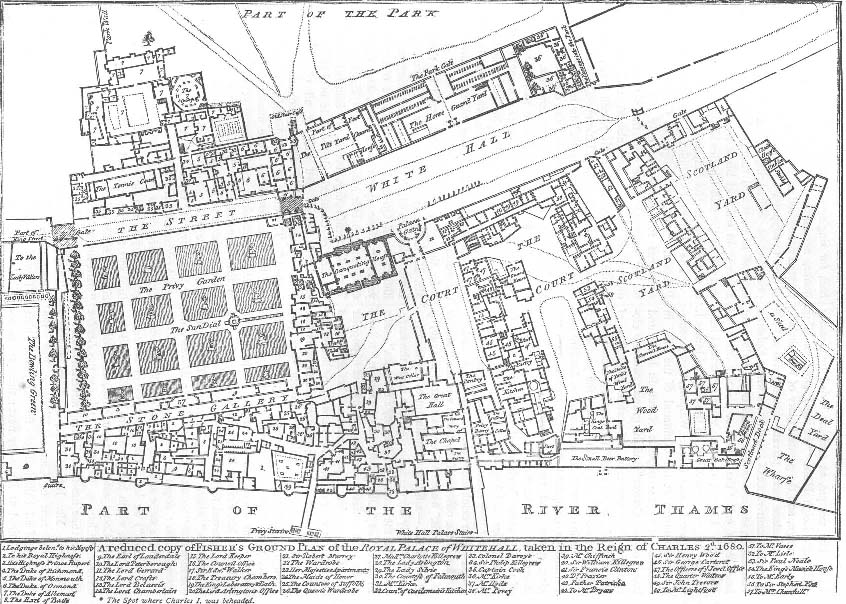
Plan of Whitehall Palace from the 17th century