Edmund de la Pole did not have the safest upbringing thanks to his family. First, his brother John fought against Henry VII side by side with Richard III but changed allegiance when the battle was over and the victor was found - or so it seemed. John apparently had not given up all hopes of power and joined the short-lived rebellion of Simnel where he died in battle.
This now meant that the 15-year old Edmund de la Pole suddenly found himself the head of the York-family which - unfortunately for him - made him the greatest threat to Henry VII. For the time being Henry VII decided to leave Edmund with the Dukedom that his brother had possessed before he died as well as the title of Earl of Suffolk. In 1501 Edmund dared not stay any longer in England and fled to continental Europe - and then Edmund was stripped of his title as Duke. It seemed that Edmund himself had no intention of taking the throne by force either by an invasion or the threat of civil war. That it why Edmund de la Pole's road to the scaffold seems all the more remarkable and unfair.
Edmund (who was still abroad) went aboard a ship owned by the Holy Roman Emperor Maximilian II which was heading for Spain. As it happens the weather does not always cooperate - something the Spanish Armada would later learn all too well - and the ship had to change course when a storm hit. This was disastrous news for Edmund because the destination was now the England he had fled - and Henry VII was waiting for him. Perhaps Edmund had managed to make friends with the Holy Roman Emperor because the Emperor refused to deliver Edmund to Henry unless he was assured that no harm whatsoever would become him. Henry VII promised so and to be fair he kept his promise. The problem was that Henry VII's health was declining and shortly afterwards he was dead. Sadly for Edmund de la Pole the new King Henry VIII was convinced that he had had no share in the promise and quickly arrested Edmund.
In 1513 Henry VIII signed the order for Edmund de la Pole's execution - the man himself was imprisoned in the Tower of London. Edmund de la Pole was beheaded sometime around April 30th within the Tower of London.
Sunday, 8 September 2013

The Arrest and Execution of Cromwell
Ever since the disastrous and short-lived marriage of Henry VIII to Anne of Cleves, Cromwell's place in the royal favour seemed wavering and Henry VIII did nothing to settle matters. After having given Cromwell the cold shoulder he made him Earl of Essex in April 1540. But Cromwell was far from safe despite his newest elevation.
On Saturday 10th June 1540 Thomas Cromwell was in the middle of a Council meeting when he was suddenly interrupted at around 3 o'clock in the afternoon. Every single one of his most powerful enemies watched when the Royal Guards marched into the room; Cromwell of course immediately understood what was happening and reputedly threw down his hat on the table - a sign of anger or one last frustrated gesture? To make the scene even more humiliating for the soon-to-be prisoner was that the Dukes of Norfolk and Southampton personally removed his chains of office from his shoulders before the Captain of the Royal Guard took hold of him. While he was leaving the room the other Council members began accusing him of treason. Thus Cromwell was escorted through Westminster and down to an awaiting barge ready to take him to the Tower of London.
In the end there was to be no trial for the ever hard-working Thomas Cromwell nor any chance for him to plead his case. On 29th June an Act of Attainder with Cromwell's name was drawn up and just like that he was found guilty in heresy and treason. It is interesting that Cromwell was not blamed for the terrible marriage of Henry VIII and Anne of Cleves (the marriage was not yet dissolved) nor how the King had chosen his policies. Instead Cromwell's main accusation was that of heresy, this accusation was the brainchild of the Catholic Duke of Norfolk and the embittered Catholic bishops that Cromwell had swiftly removed from their offices. Together, they managed to convince Henry VIII that Cromwell was not only spreading heretical messages himself but also openly supported heretics going as far as to even release them from prison and then taking care of their enemies. Also, Cromwell was condemned for corruption through the sale of licenses and pass-ports to people not approved of by the King. Lastly, Cromwell was accused of wishing to marry Lady Mary Tudor which would make him an immediate threat to the King's personal position because Cromwell would then have a claim on the throne through his wife.
While awaiting his fate within the Tower of London Cromwell wrote two letters to Henry VIII both fervently protesting his innocence. None was answered.
Then on 28th July 1540 Cromwell was taken from his cell to the Tower Green where he faced the scaffold. He was to be given a private execution but it can be safe to say that none of his previous enemies were there to watch the spectacle - they had all rushed off to watch the King marry Katherine Howard on the same day. It was his recently granted title that probably saved Cromwell from being either hanged, drawn and quartered or burned alive at the stake: as a nobleman he could be beheaded for treason. But no matter what Cromwell died an innocent man since no real evidence could be held against him besides what was openly planted by his enemies.
As Thomas Cromwell stood on the scaffold he apologised if he had ever displeased or defied God or the King. Interestingly enough he also mentioned that he would die in the Catholic faith - could this be an indication that he was threatened into saying so or perhaps even tortured? It has been suggested by Hall's Chronicle of Tudor England that the execution was made even more painful for Cromwell because his executioner failed to strike his head off with one blow but hacked away at his skull and shoulders until the head finally came off. Considering that inexperienced executioners was a very real part of Tudor England (as Mary, Queen of Scots would also come to now) this might actually be true. However, there is no evidence to support that Cromwell's enemies had made the executioner drunk before performing his duty. So, in the end this was how Thomas Cromwell met his fate. His head was boiled and placed on a spike on the London Bridge as was customary when dealing with traitors - as a last mockery his head was turned away from London city itself so that not even his now dead eyes could gaze upon the city.
Henry VIII would very soon afterwards come to regret this execution of what he called his "most faithful servant".
On Saturday 10th June 1540 Thomas Cromwell was in the middle of a Council meeting when he was suddenly interrupted at around 3 o'clock in the afternoon. Every single one of his most powerful enemies watched when the Royal Guards marched into the room; Cromwell of course immediately understood what was happening and reputedly threw down his hat on the table - a sign of anger or one last frustrated gesture? To make the scene even more humiliating for the soon-to-be prisoner was that the Dukes of Norfolk and Southampton personally removed his chains of office from his shoulders before the Captain of the Royal Guard took hold of him. While he was leaving the room the other Council members began accusing him of treason. Thus Cromwell was escorted through Westminster and down to an awaiting barge ready to take him to the Tower of London.
In the end there was to be no trial for the ever hard-working Thomas Cromwell nor any chance for him to plead his case. On 29th June an Act of Attainder with Cromwell's name was drawn up and just like that he was found guilty in heresy and treason. It is interesting that Cromwell was not blamed for the terrible marriage of Henry VIII and Anne of Cleves (the marriage was not yet dissolved) nor how the King had chosen his policies. Instead Cromwell's main accusation was that of heresy, this accusation was the brainchild of the Catholic Duke of Norfolk and the embittered Catholic bishops that Cromwell had swiftly removed from their offices. Together, they managed to convince Henry VIII that Cromwell was not only spreading heretical messages himself but also openly supported heretics going as far as to even release them from prison and then taking care of their enemies. Also, Cromwell was condemned for corruption through the sale of licenses and pass-ports to people not approved of by the King. Lastly, Cromwell was accused of wishing to marry Lady Mary Tudor which would make him an immediate threat to the King's personal position because Cromwell would then have a claim on the throne through his wife.
While awaiting his fate within the Tower of London Cromwell wrote two letters to Henry VIII both fervently protesting his innocence. None was answered.
Then on 28th July 1540 Cromwell was taken from his cell to the Tower Green where he faced the scaffold. He was to be given a private execution but it can be safe to say that none of his previous enemies were there to watch the spectacle - they had all rushed off to watch the King marry Katherine Howard on the same day. It was his recently granted title that probably saved Cromwell from being either hanged, drawn and quartered or burned alive at the stake: as a nobleman he could be beheaded for treason. But no matter what Cromwell died an innocent man since no real evidence could be held against him besides what was openly planted by his enemies.
As Thomas Cromwell stood on the scaffold he apologised if he had ever displeased or defied God or the King. Interestingly enough he also mentioned that he would die in the Catholic faith - could this be an indication that he was threatened into saying so or perhaps even tortured? It has been suggested by Hall's Chronicle of Tudor England that the execution was made even more painful for Cromwell because his executioner failed to strike his head off with one blow but hacked away at his skull and shoulders until the head finally came off. Considering that inexperienced executioners was a very real part of Tudor England (as Mary, Queen of Scots would also come to now) this might actually be true. However, there is no evidence to support that Cromwell's enemies had made the executioner drunk before performing his duty. So, in the end this was how Thomas Cromwell met his fate. His head was boiled and placed on a spike on the London Bridge as was customary when dealing with traitors - as a last mockery his head was turned away from London city itself so that not even his now dead eyes could gaze upon the city.
Henry VIII would very soon afterwards come to regret this execution of what he called his "most faithful servant".
 |
| Cromwell's execution on "the Tudors" |
Sunday, 1 September 2013
A Disturbing Found
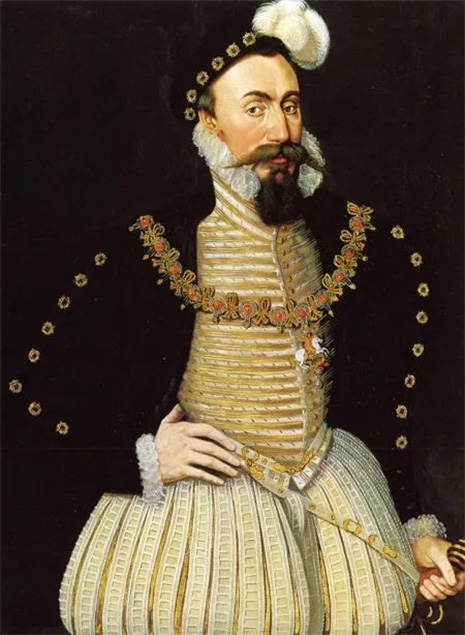
On 23 February 1554 Henry Grey, Duke of Suffolk was executed by an axeman on the order of Mary I. In 1851 (almost 300 years after his death) workmen were working in the Holy Trinity church in London when they discovered something that must have made them skip a heartbeat. In a vault the severed head of Henry Grey lay perfectly intact thanks to the thick sawdust - rich on tannin and from oak - that had been in the casket where the beheaded Lord's head fell for so long ago.
It is thought that the grieving widow of Henry Grey who had also lost her daughter just eleven days earlier had taken the head and quickly hidden it before it could be put on a spike on the London Bridge.
Henry Grey had actually bought the Holy Trinity church in the 1540's after Henry VIII had dissolved the monasteries so it is very likely that he was buried within the walls of his own property. The Holy Trinity church was completely destroyed during the German blitz during World War II. However, the head was not lost in the ruins. In 1899 the Holy Trinity church had been merged with another church, St. Botolph's-without-Aldgate and the head was transferred to this other church. Now it is placed somewhere within this church but its' exact location is unknown.
It is thought that the grieving widow of Henry Grey who had also lost her daughter just eleven days earlier had taken the head and quickly hidden it before it could be put on a spike on the London Bridge.
Henry Grey had actually bought the Holy Trinity church in the 1540's after Henry VIII had dissolved the monasteries so it is very likely that he was buried within the walls of his own property. The Holy Trinity church was completely destroyed during the German blitz during World War II. However, the head was not lost in the ruins. In 1899 the Holy Trinity church had been merged with another church, St. Botolph's-without-Aldgate and the head was transferred to this other church. Now it is placed somewhere within this church but its' exact location is unknown.
 |
| Henry Grey, Duke of Suffolk |
Henry Grey's Ghost
Henry Grey, Duke of Suffolk and father to the doomed Lady Jane Grey has been seen at Astley Castle long after his death. Astley Castle was one of the Grey-family's private residences and it was here that Henry Grey fled to after the failed Wyatt's Rebellion. Here he hid in a tree until one of his servants gave his position away and he was dragged out and taken to the Tower. He was beheaded by Mary I in February 1554. Now his headless ghosts haunts the castle - holding its' head under one arm.
 |
| Astley Castle |
Saturday, 31 August 2013
Elizabeth I at Windsor Castle
Elizabeth I's ghost is one of the many ghosts reportedly found at Windsor Castle. The legendary Queen appears in the Royal Library where she has been seen by several members of the English Royal Family. Edward VII once told his mistress that he had seen a ghost looking remarkably much like the portraits of Elizabeth I. George III (his madness put aside) once said that he had had a conversation with a woman who had told him that she was "married to England" - and wearing black. Whenever Elizabeth I appears at Windsor she always wears a black gown with equally black lace. Even George VI (Elizabeth II's father) said that he saw her just before the outbreak of the Second World War - perhaps she was returning to protect her country once again?
Her high heels echoes from the wooden floors as she makes her way through the library into an inner room. One of these sightings were reported by the Grenadier Lieutenant Glynn who was reading in the library when he heard that sound of high heels clacking on the floor. When he looked about he saw the manifestation of Elizabeth I and when she disappeared into the inner chamber (where there is just one entrance) he followed. However, when he entered the inner chamber she disappeared completely. Also, her ghost has been seen at the window of Dean's Cloister - strangely enough Anne Boleyn has been seen standing in the window of that same cloister!

Her high heels echoes from the wooden floors as she makes her way through the library into an inner room. One of these sightings were reported by the Grenadier Lieutenant Glynn who was reading in the library when he heard that sound of high heels clacking on the floor. When he looked about he saw the manifestation of Elizabeth I and when she disappeared into the inner chamber (where there is just one entrance) he followed. However, when he entered the inner chamber she disappeared completely. Also, her ghost has been seen at the window of Dean's Cloister - strangely enough Anne Boleyn has been seen standing in the window of that same cloister!
A Grieving Mother & a Neglected Child
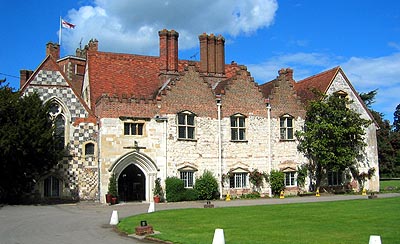
Elizabeth Holby was the wife of Sir Thomas Holby and a close friend of Elizabeth I. Her ghost is said to haunt Bisham Abbey in Buckinghamshire where the couple once lived.
The tale goes that Elizabeth Holby had great ambitions for her children but was in despair to find that her youngest son, William, was a slow learner. She would often beat him if his studies did not meet her demands and one day Elizabeth Holby apparently found them to be not just poorly executed but also not finished at all. This provoked a specially severe beating and afterwards poor William was locked into the Abbey's tower until he had finished his studies. Shortly afterwards Elizabeth Holby was called back to court (perhaps Elizabeth I missed her) and she went right away. However, she forget to tell anyone that she had locked William in the tower...
Two days later she returned and wondered why her youngest son was not there to greet her. Soon it dawned on her and she hurried up to the tower where she found William dead. Elizabeth never forgave herself and mourned this slow witted child for the rest of her life - and beyond that.
Ever since Elizabeth Holby's death some 400 years ago her ghost has been said to appear on the ground of Bisham Abbey. She is always wearing mourning clothes for her dead child. Many of these sightings has reported that she is washing blood off of her hands. Admiral Vansittart - who lived here just before the 20th century - once wrote that he had seen the lady herself. The Admiral was in the Great Hall where Elizabeth Holby's portrait hangs when he felt that prickling feeling that tells you that you are being watched. He quickly turned around and just saw her before she disappeared. He then turned to the portrait to make sure that it was actually her and found the frame to be now empty!
It is not just the grieving mother who haunts the Bisham Abbey. Giving other strange little reports it would seem that William has never quite left either. Sometimes a flickering candle can be seen in the tower's window when there is no one around. Footsteps and a quiet sobbing also comes from within the house. This has all been reported by guests who stayed at the house.
The tale goes that Elizabeth Holby had great ambitions for her children but was in despair to find that her youngest son, William, was a slow learner. She would often beat him if his studies did not meet her demands and one day Elizabeth Holby apparently found them to be not just poorly executed but also not finished at all. This provoked a specially severe beating and afterwards poor William was locked into the Abbey's tower until he had finished his studies. Shortly afterwards Elizabeth Holby was called back to court (perhaps Elizabeth I missed her) and she went right away. However, she forget to tell anyone that she had locked William in the tower...
Two days later she returned and wondered why her youngest son was not there to greet her. Soon it dawned on her and she hurried up to the tower where she found William dead. Elizabeth never forgave herself and mourned this slow witted child for the rest of her life - and beyond that.
Ever since Elizabeth Holby's death some 400 years ago her ghost has been said to appear on the ground of Bisham Abbey. She is always wearing mourning clothes for her dead child. Many of these sightings has reported that she is washing blood off of her hands. Admiral Vansittart - who lived here just before the 20th century - once wrote that he had seen the lady herself. The Admiral was in the Great Hall where Elizabeth Holby's portrait hangs when he felt that prickling feeling that tells you that you are being watched. He quickly turned around and just saw her before she disappeared. He then turned to the portrait to make sure that it was actually her and found the frame to be now empty!
It is not just the grieving mother who haunts the Bisham Abbey. Giving other strange little reports it would seem that William has never quite left either. Sometimes a flickering candle can be seen in the tower's window when there is no one around. Footsteps and a quiet sobbing also comes from within the house. This has all been reported by guests who stayed at the house.
 |
| Bisham Abbey |
Friday, 30 August 2013
Blue & Fur

Just at the tip of the neck a very small dark ruff peeps out which is probably a part of his shirt underneath (it can also be seen at the edge of the sleeves). Though it cannot be seen on this picture he is also wearing tall, black leather boots.
Anne's Green Damask
 Joss Stone wears this on "the Tudors" (season 4 episode 3) when she is with Elizabeth at Hever Castle and they are surprised by Henry VIII. The sleeves and the bodice mainly consists of dark green velvet while the petticoat and the cut-throughs are of an olive green damask. The neckline has been decorated with pearls only interrupted to show of more of the precious damask. At the centre of the bodice a very large square brooch with a topaz at the centre has been pinned to the stiff bodice. Besides the topaz there are four small pearls at each corner and a drop pearl hanging from the brooch.
Henry & Jane's Pendant
 This might not be a piece of jewellery in itself but it is the sketch of a pendant by Holbein. It consists of the initials of Henry VIII (H) and Jane Seymour (I) - at the time there was no difference between a "J" and an "I". There are four gemstones set on the golden based pendant: two might be carnelians, one an emerald and one an onyx. Hanging from the pendant are three large pearls. From the drawing it seems that the pendant was supposed to be worn hanging from a ribbon rather than a metal chain.
Wyatt's Rebellion
Sir Thomas Wyatt was the "Wyatt" in question who began the rebellion alongside the Duke of Suffolk and Carew. It began in 1554 when the news of Mary I's intention to marry Philip of Spain had spread to the wide part of the population - and it was not a popular match. It was not so much the Spanish King who was the problem but rather the religious oppression he would bring with him; the English had just gotten used to a more liberal church and desperately wanted to prevent the Spanish Inquisition from sweeping through England.
The overall plan was to overthrow Mary and replace her with her half-sister Elizabeth who was then to marry Edward Courtenay whom Mary had already rejected as a husband (a bit slighted..?). In order for this plan to succeed the rebels would have to stage the rebellion at three key places: Kent, the Midlands and the West Country. Meanwhile a French fleet - who was fearing that a Spanish husband with Habsburg blood would pose to much of a threat - would take up the main part of the English Channel so that continental aid could not reach Mary. As with all rebellions all this was to take place without the Parliament's knowledge.
But then it went wrong. First of all the Parliament already knew that something was happening thanks to Simon Renard who was the Imperial Ambassador who contacted Stephen Gardiner. This would normally be reason enough to "cancel" a rebellion but the disaster was not over yet. It would seem that Wyatt had grossly misplaced his key locations for the rebellions. The West Country's population was mainly Catholic and as such would never have seen it as a problem that their Catholic Queen married a Catholic King. The loyalty that Mary had been promised at her coronation was still clear in the memories of the people of the Midlands who did not want to commit treason against their Queen. Consequently, the Duke of Suffolk found himself with only 140 men and in a very dangerous position.
Meanwhile, Stephen Gardiner had taken Edward Courtenay into interrogation. Because of his noble descent Courtenay would normally not be tortured but the protocols mentions that the interrogation was "robust" - perhaps an indicator that Gardiner disregarded Courtenay's privileges. Either way Courtenay soon began talking and told them everything he knew off.
It was only Thomas Wyatt himself who had had any sort of success with raising an army of 4000 men and now lead them towards London. The Duke of Norfolk was sent on behalf of Mary's government but the Duke had never expected 500 of his men to suddenly change their allegiance and join Wyatt! Wyatt failed to take advantage of this when he decided to wait before entering London - this meant that the city had plenty of time to secure itself. Ludgate was the gate that Wyatt had intended to cross to get to the heart of the city but it had been raised and he had to take his rebels through the narrow gates nearby. And this is where it all ended. Narrow streets are any soldier's nightmare because they leave you open to ambushes. This is was happened to Wyatt's troops and it would be the end of the rebellion.
What happened next?
Mary had been convinced that severe punishments would only help to estrange herself from her people so the punishments were surprisingly mild - for a Tudor, that is. It was about 90 people who were executed including Thomas Wyatt and the Duke of Suffolk. Others were simply let go. Prior to his execution Wyatt had been tortured in order to implicate Princess Elizabeth but he never caved in and as such no evidence could be found.
But there were two other nobles who could no longer count themselves save any more. Lady Jane Grey and her husband Guildford Dudley were both beheaded because it was considered too dangerous to have Lady Jane Grey as a figure whom people could support instead of Mary. So, despite having played no part in the rebellion Lady Jane Grey had to put her head on the block. The Wyatt Rebellion might have been put down but the displeasure of Mary's marriage was still widely felt by the population which would later add to Mary's rising unpopularity.
The overall plan was to overthrow Mary and replace her with her half-sister Elizabeth who was then to marry Edward Courtenay whom Mary had already rejected as a husband (a bit slighted..?). In order for this plan to succeed the rebels would have to stage the rebellion at three key places: Kent, the Midlands and the West Country. Meanwhile a French fleet - who was fearing that a Spanish husband with Habsburg blood would pose to much of a threat - would take up the main part of the English Channel so that continental aid could not reach Mary. As with all rebellions all this was to take place without the Parliament's knowledge.
But then it went wrong. First of all the Parliament already knew that something was happening thanks to Simon Renard who was the Imperial Ambassador who contacted Stephen Gardiner. This would normally be reason enough to "cancel" a rebellion but the disaster was not over yet. It would seem that Wyatt had grossly misplaced his key locations for the rebellions. The West Country's population was mainly Catholic and as such would never have seen it as a problem that their Catholic Queen married a Catholic King. The loyalty that Mary had been promised at her coronation was still clear in the memories of the people of the Midlands who did not want to commit treason against their Queen. Consequently, the Duke of Suffolk found himself with only 140 men and in a very dangerous position.
Meanwhile, Stephen Gardiner had taken Edward Courtenay into interrogation. Because of his noble descent Courtenay would normally not be tortured but the protocols mentions that the interrogation was "robust" - perhaps an indicator that Gardiner disregarded Courtenay's privileges. Either way Courtenay soon began talking and told them everything he knew off.
It was only Thomas Wyatt himself who had had any sort of success with raising an army of 4000 men and now lead them towards London. The Duke of Norfolk was sent on behalf of Mary's government but the Duke had never expected 500 of his men to suddenly change their allegiance and join Wyatt! Wyatt failed to take advantage of this when he decided to wait before entering London - this meant that the city had plenty of time to secure itself. Ludgate was the gate that Wyatt had intended to cross to get to the heart of the city but it had been raised and he had to take his rebels through the narrow gates nearby. And this is where it all ended. Narrow streets are any soldier's nightmare because they leave you open to ambushes. This is was happened to Wyatt's troops and it would be the end of the rebellion.
What happened next?
Mary had been convinced that severe punishments would only help to estrange herself from her people so the punishments were surprisingly mild - for a Tudor, that is. It was about 90 people who were executed including Thomas Wyatt and the Duke of Suffolk. Others were simply let go. Prior to his execution Wyatt had been tortured in order to implicate Princess Elizabeth but he never caved in and as such no evidence could be found.
But there were two other nobles who could no longer count themselves save any more. Lady Jane Grey and her husband Guildford Dudley were both beheaded because it was considered too dangerous to have Lady Jane Grey as a figure whom people could support instead of Mary. So, despite having played no part in the rebellion Lady Jane Grey had to put her head on the block. The Wyatt Rebellion might have been put down but the displeasure of Mary's marriage was still widely felt by the population which would later add to Mary's rising unpopularity.
 |
| Thomas Wyatt |
 |
| Claimed to be Wyatt's list of arms |
 |
| Depiction of Wyatt's execution |
Greenwich Palace
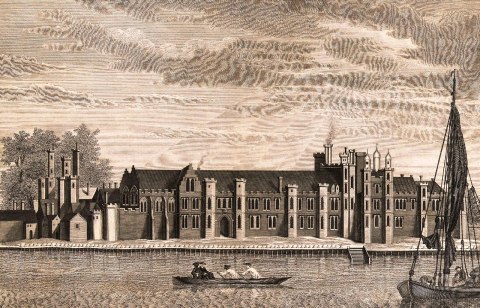
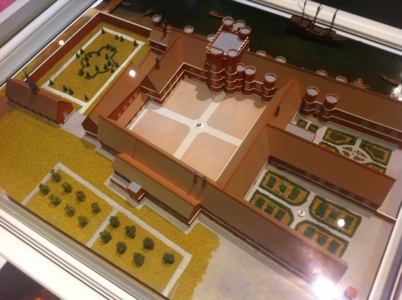
Built in 1477 Greenwich Palace is also known as the Palace of Placentia - a name given by Henry VIII which means "the Palace of Pleasure". It was first the property of Henry V who gave this little present to his brother, the Duke of Gloucester. In 1499 Henry VII was on the throne and had the palace expanded using no less than 600,000 red bricks - all produced in England of course. A favourite of the Tudors it was also known to be the most modern palace of its' time so of course the royal Tudors spent a lot of time here. By the time the Tudors inhabited the palace it was located quite a bit outside of London and close to the Thames because it was easier to travel by water than by the roads which were often muddy.
Henry VII added three large courtyards around 1500 and also had a hunting park of 200 acres. Henry VIII also added a tiltyard measuring 650 x 250 feet! Also, two octagonal towers overlooked the tiltyard making it perfect for great displays.
It was the birthplace of no less than four Tudors: Henry VIII, Edmund Tudor, Elizabeth I and Mary I. Henry VIII was baptised in the church of St. Alfege and Elizabeth I was baptised in the church of the Observant Friars which was just close by. But there is also a more sinister story concerning the Tudors and Greenwich. Henry VIII married Catherine of Aragon as well as Anne of Cleves in the chapel. It was here that Anne Boleyn was staying when she was arrested and taken by barge to the Tower of London. Later on Anne Boleyn's death warrant was signed by Henry VIII here.
Henry VIII loved this palace nonetheless - apparently he never thought of the terror his previous wives had felt there - and made it his favourite residence until Whitehall and Hampton Court Palace became all the rage. But while he stayed there Henry had the place expanded again to accommodate his need of entertainment: a jousting area, a cock pit, tennis courts, kennels for his hunting dogs and stables. But that was not all. A new banqueting hall, forges and armoury was also added.
Ironically enough it was at the jousting grounds of Greenwich that Henry VIII had his jousting accident that left him unconscious for two hours - he would never joust again. Elizabeth I spent most of her summers at Greenwich and it is allegedly where Walter Raleigh is said to have put his cape over a puddle for the Queen. When Mary Tudor had married Charles Brandon - without her brother's permission - the palace was were the marriage was solemnized and made public.
The sad thing is that Charles II had the Tudor parts torn down to built his own sumptuous palace.
![Anonymous painting of Greenwich Palace during the reign of Henry VIII. [Wiki]](http://tudorqueen6.files.wordpress.com/2013/07/greenwich_palace_anonymous.jpg?w=470&h=339)


Henry VII added three large courtyards around 1500 and also had a hunting park of 200 acres. Henry VIII also added a tiltyard measuring 650 x 250 feet! Also, two octagonal towers overlooked the tiltyard making it perfect for great displays.
It was the birthplace of no less than four Tudors: Henry VIII, Edmund Tudor, Elizabeth I and Mary I. Henry VIII was baptised in the church of St. Alfege and Elizabeth I was baptised in the church of the Observant Friars which was just close by. But there is also a more sinister story concerning the Tudors and Greenwich. Henry VIII married Catherine of Aragon as well as Anne of Cleves in the chapel. It was here that Anne Boleyn was staying when she was arrested and taken by barge to the Tower of London. Later on Anne Boleyn's death warrant was signed by Henry VIII here.
Henry VIII loved this palace nonetheless - apparently he never thought of the terror his previous wives had felt there - and made it his favourite residence until Whitehall and Hampton Court Palace became all the rage. But while he stayed there Henry had the place expanded again to accommodate his need of entertainment: a jousting area, a cock pit, tennis courts, kennels for his hunting dogs and stables. But that was not all. A new banqueting hall, forges and armoury was also added.
Ironically enough it was at the jousting grounds of Greenwich that Henry VIII had his jousting accident that left him unconscious for two hours - he would never joust again. Elizabeth I spent most of her summers at Greenwich and it is allegedly where Walter Raleigh is said to have put his cape over a puddle for the Queen. When Mary Tudor had married Charles Brandon - without her brother's permission - the palace was were the marriage was solemnized and made public.
The sad thing is that Charles II had the Tudor parts torn down to built his own sumptuous palace.
 |
| Greenwich during the Tudors |
 |
| Model of the palace during the Tudors |
Wednesday, 14 August 2013
The Tudors and their Trees
It may seem odd but there actually are a few connections between the Tudors and different trees. Let's take a look at how they are connected...
 This tree is known as "the Queen Elizabeth Oak" and is located in Northiam, Sussex. Elizabeth I stayed here on her way to Rye in 1573 and decided to eat her meal in the shade of the oak. When she was done she left her shoes behind. These green damask shoes - with a heel of 2,5 inch - still exits and are exhibited at Brickwall House. The little plaque next to the tree informs visitors of the oak's royal past.
And it was under an oak tree that Elizabeth first heard the news that she was now Queen of England. The actual tree is long gone but Queen Elizabeth II herself planted a new tree on the exact spot of the old one to honour the memory of her namesake. The new (and old) oak tree was placed at Hatfield House where Elizabeth had been under house arrest. The to-be Queen was either eating an apple or reading when courtiers suddenly rushed to her side and bowed down to her. She then dropped gracefully to her knees herself - having risen at the sight of the courtiers - and made her famous quotation in Latin: "This is the Lord's doing and it is marvellous in our eyes."
Another little tidbit is about Elizabeth's doomed mother Anne Boleyn. Her ghost is said to appear at her childhood home Hever Castle in Kent where she roams around a large oak (perhaps a family favourite?). As it happens this was one of the trees under which Henry VIII courted Anne before their tragic marriage. Legend has it that the couple even danced around the tree. Despite this link to Anne Boleyn and Henry VIII the tree is also known as "the Queen Elizabeth Oak" (the names have been ground for confusion)
This tree is known as "the Queen Elizabeth Oak" and is located in Northiam, Sussex. Elizabeth I stayed here on her way to Rye in 1573 and decided to eat her meal in the shade of the oak. When she was done she left her shoes behind. These green damask shoes - with a heel of 2,5 inch - still exits and are exhibited at Brickwall House. The little plaque next to the tree informs visitors of the oak's royal past.And it was under an oak tree that Elizabeth first heard the news that she was now Queen of England. The actual tree is long gone but Queen Elizabeth II herself planted a new tree on the exact spot of the old one to honour the memory of her namesake. The new (and old) oak tree was placed at Hatfield House where Elizabeth had been under house arrest. The to-be Queen was either eating an apple or reading when courtiers suddenly rushed to her side and bowed down to her. She then dropped gracefully to her knees herself - having risen at the sight of the courtiers - and made her famous quotation in Latin: "This is the Lord's doing and it is marvellous in our eyes."
Another little tidbit is about Elizabeth's doomed mother Anne Boleyn. Her ghost is said to appear at her childhood home Hever Castle in Kent where she roams around a large oak (perhaps a family favourite?). As it happens this was one of the trees under which Henry VIII courted Anne before their tragic marriage. Legend has it that the couple even danced around the tree. Despite this link to Anne Boleyn and Henry VIII the tree is also known as "the Queen Elizabeth Oak" (the names have been ground for confusion)
Monday, 12 August 2013
Vengeance is Mine

Romantic Henry

Silver braiding adorns the edge of the purse and it is opened by a drawstring pouch. Perhaps it was used for coins?
Fashion is Status
Fashion has always been a mean to show off your status and the Tudor times were no different. The rules were many, complicated and oh yeah, enforced by law. Remember the Earl of Surrey who got beheaded for wearing his ancestors badge because Henry VIII thought it was provocative?
The Sumptuary Laws divides people into categories according to who could wear what. Remember that the King and Queen (as well as their children) could wear everything so they are not listed among the remaining titles. Those who are not listed were simply not allowed to wear whatever garment or fabric it might concern.
Take a look at these rules and step into the "Versailles"-ish Tudor fashion rules.
Earls
Exception: viscounts and barons are permitted to use these fabrics on their doublets and their coats - as long as the coat is sleeveless!
Dukes, Marquesses, Earls and their children as well as Barons and knights
This one actually has a logical reason to it. In order to make sure that the English farmers would not loose money (causing inflation) it was forbidden to buy wool that was not English - or at least except if you are noble or royal. So actually this can be seen more as a strange way to keep employment in England than a restriction.
Sons of Barons, knights and men of a certain income
The Sumptuary Laws divides people into categories according to who could wear what. Remember that the King and Queen (as well as their children) could wear everything so they are not listed among the remaining titles. Those who are not listed were simply not allowed to wear whatever garment or fabric it might concern.
Take a look at these rules and step into the "Versailles"-ish Tudor fashion rules.
Earls
- Cloth of gold and silver including gold/silver silk, satin and sables:
Exception: viscounts and barons are permitted to use these fabrics on their doublets and their coats - as long as the coat is sleeveless!
Dukes, Marquesses, Earls and their children as well as Barons and knights
- Wool made in a foreign country
- Crimson, scarlet and blue velvet
This one actually has a logical reason to it. In order to make sure that the English farmers would not loose money (causing inflation) it was forbidden to buy wool that was not English - or at least except if you are noble or royal. So actually this can be seen more as a strange way to keep employment in England than a restriction.
Sons of Barons, knights and men of a certain income
- Velvet for a gown, coat or entire ensemble
- Leopard's fur
- Embroidery
- "Pricking" of gold and silver - and never in silk
- Taffeta, satin, damask and silk on the outer outfit
Any man who makes a profit of at least a 100 pounds a year:
- Furs from outside any of the crowns' lands
- Velvet
The son (as long as it is an heir) or daughter of a knight, that son's wife and a man worth more than 200 pounds in goods
- Silk in hoses, hats, girdle, bonnet, nightcaps, scabbards and shoes
And these were just the rules for the upper part of society! But since the other part is also the greatest there is no need to leave them out:
It was prohibited for any serving man (except those of noble birth) to wear fur. Nor were they allowed to use more than 2½ yards of fabric for their coats. The serving females were not allowed to use more than 3 yards of fabric on a long gown.
Finally servants, common labourers, shepherds and farmers worth less than 10 pounds a year are not allowed to wear cloth worth more than 2 shilling. And if you did so anyway? Three days in the stocks!
Sunday, 11 August 2013
My Other Blogs
As you might have guessed I am a history nerd and of course I have more than one blog on history. These are my other blogs and I hope you will visit them and tell me what you think :)
This Is Versailles Madame:
Everything on the French court at Versailles and the people living there before the revolution - from Louis XIV to Louis XVI.
Link: www.thisisversaillesmadame.blogspot.com
The Kingdom of Denmark:
The world's oldest kingdom has a very rich and dramatic story with many colourful personalities - as a Dane I can only recommend it.
Link: www.thekingdomofdenmark.blogspot.com
Historical Myths and Rumours:
There are surprisingly many things about historical events and people that we believe to be true but actually is not - and the other way around.
Link: www.historicalmythsandrumours.blogspot.com
Feel free to ask me questions or comment on any of my blogs, it is always nice to meet someone with the same interest as me
This Is Versailles Madame:
Everything on the French court at Versailles and the people living there before the revolution - from Louis XIV to Louis XVI.
Link: www.thisisversaillesmadame.blogspot.com
The Kingdom of Denmark:
The world's oldest kingdom has a very rich and dramatic story with many colourful personalities - as a Dane I can only recommend it.
Link: www.thekingdomofdenmark.blogspot.com
Historical Myths and Rumours:
There are surprisingly many things about historical events and people that we believe to be true but actually is not - and the other way around.
Link: www.historicalmythsandrumours.blogspot.com
Feel free to ask me questions or comment on any of my blogs, it is always nice to meet someone with the same interest as me
Sunday, 21 July 2013
Anne Boleyn's Gateway
It was Henry VIII who built what we now know as Anne Boleyn's Gateway. Of course, it was not named so at the time (seems unlikely that Henry would erase all trace of Anne but allow that name) but was given its name later on due to one beautiful, yet tragic detail: the surviving initials of Anne Boleyn and Henry VIII intertwined with a so-called "lover's knots". These emblems were overlooked in 1536 when Henry had ordered all Anne's emblems replaced by Jane Seymour's.
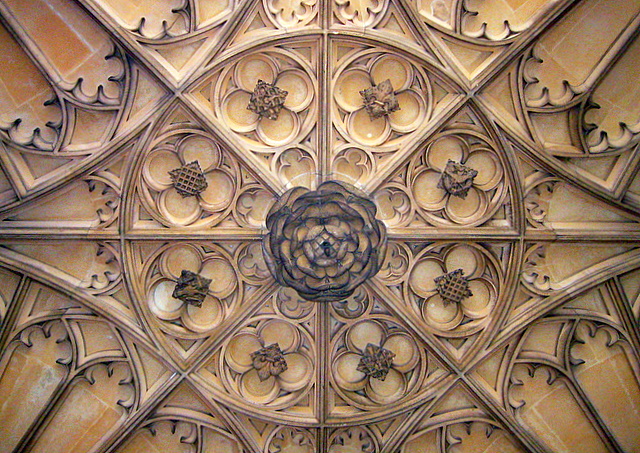
The gateway itself lies between the Base Court and the Clock Court and was restored recently to its former glory. Henry (of course) put his own mark on the gateway in the shape of a large Tudor-rose in the very centre of the ceiling.

The gateway itself lies between the Base Court and the Clock Court and was restored recently to its former glory. Henry (of course) put his own mark on the gateway in the shape of a large Tudor-rose in the very centre of the ceiling.
 |
| The Tudor-rose in the centre |
 |
| Henry's unique clock hangs over the gateway |
 |
| Close-up of one of the surviving lover's knots of Henry and Anne |
Accurate Anne

Elvi Hale wore this gown as Anne of Cleves in the BBC production of "Six Wives of Henry VIII" from 1970. From the look of it BBC paid a lot of attention to getting the dress as historically correct as possible. And if you are wondering where on earth you have seen this dress before then take a look at the official portrait of the actual Anne of Cleves.
The rich red fabric is quite possibly velvet. It is mainly the amount of gold on the dress that indicates Anne's new status - notice the odd pattern at the edge of the sleeves, hanging from the waist and surrounding the bodice. The high waistline (we would call it an empire cut) was not used in England at this time which just added to the "strange" look that Anne is said to have portrayed. Also, it is very rare to see a noblewoman of this age wear a belt since it was not a part of the common attire. Another thing that sets the dress apart is the lace-work above the neckline that ends around the choker necklace. An Englishwoman would normally just have bare skin.
 Besides the large amounts of brocaded golden fabric Anne also wears three necklaces: two heavy gold chains and a choker with a cross pendant. From underneath the heavy sleeves the frizzled chemise appears with its white fabric.
And then there is the hat. Unfortunately, I do not know much of German fashion during this particular time period so I will let it be up to your eyes to describe it.
Saturday, 20 July 2013
Anne Boleyn's Six Fingers
One of the rumours that thrived at the Tudor court after 1536 was that the doomed Queen Anne Boleyn had had six fingers. To us that would be a deformity but nothing serious; however, at the time it was considered a sign of witchcraft. Since Anne had been convicted of witchcraft it was all too easy to make something out of an otherwise innocent physical flaw. Like every other rumour this needs to be checked into.
Nicholas Sander (or Saunders) is one of those names you cannot avoid when investigating this case. He wrote the book Schismatis Anglicani (The Rise and Growth of the Anglican Schism) in which he delivers a description of Anne Boleyn's appearance:
The source has to be considered. Nicholas Sanders is estimated to have been born around 1530 - six years before Anne's execution. Since he was only a child and not even a child of the nobility at that it is extremely unlikely that he ever actually saw the infamous Queen herself. Also, he was a Roman Catholic and as such it was in his interest to discredit one of the so far strongest faces of Protestantism which Anne Boleyn certainly was. Besides, Sander did not write this book until decades after Anne's death - that leaves him a lot of time to be influenced by resentful Catholics.
One other person who would certainly have jumped on the opportunity to trash Anne's name was the Spanish ambassador Eustace Chapuys. But he never mentions anything about either the Queen's fingers or her nails. It is hard to believe that a man who mainly referred to Anne Boleyn as "the concubine" or down-right "the whore" would miss out on the opportunity of using an extra finger to call her a witch.
George Wyatt (grandson of the Thomas Wyatt who adored Anne) wrote in 1605:
And let's not forget the wonderful thing that is pure logic. Henry VIII was .. well, a vain man and it seems very strange that he should become so attached to a woman who had a such an obvious deformity. He certainly would not have married her! Actually it is doubtful that Anne would even had been a lady-in-waiting to the Queen with a sixth finger. After all, it was a dangerous time to have such imperfections.
Finally during the excavations within the Tower of London in 1876, Dr. Mouat found the body of a woman "between twenty-five and thirty years of age" who is widely believed to have been Anne Boleyn herself. If this true and that it actually is Anne herself then there is nothing to prove that an extra finger troubled Anne. According to Dr. Mouat's report the body had "well-shaped hands and feet" - no trace of a deformity.
Nicholas Sander (or Saunders) is one of those names you cannot avoid when investigating this case. He wrote the book Schismatis Anglicani (The Rise and Growth of the Anglican Schism) in which he delivers a description of Anne Boleyn's appearance:
She had a projecting tooth under the upper lip, and on her right hand, six fingers
 |
| This well-known portrait of Anne certainly shows no extra finger - but then again it wouldn't |
One other person who would certainly have jumped on the opportunity to trash Anne's name was the Spanish ambassador Eustace Chapuys. But he never mentions anything about either the Queen's fingers or her nails. It is hard to believe that a man who mainly referred to Anne Boleyn as "the concubine" or down-right "the whore" would miss out on the opportunity of using an extra finger to call her a witch.
George Wyatt (grandson of the Thomas Wyatt who adored Anne) wrote in 1605:
"There was found, indeed, upon the side of her nail upon one of her fingers, some little show of a nail, which yet was so small, by the report of those who have seen her, as the work-master seemed to leave it an occasion of greater grace to her hand, which, with the tip of one of her other fingers, might be and was usually by her hidden without any blemish to it"Now, George Wyatt's book is mainly in defence of Anne and not meant as yet another attack on the long-gone Queen. This leads us to the more likely conclusion that there may have been a hint of another nail of one of her fingers but that is still far from a new finger. And having grown up in the aftermath of Anne's reign George is most likely to have heard the nasty rumours which must have influenced him despite his good-look of Anne.
And let's not forget the wonderful thing that is pure logic. Henry VIII was .. well, a vain man and it seems very strange that he should become so attached to a woman who had a such an obvious deformity. He certainly would not have married her! Actually it is doubtful that Anne would even had been a lady-in-waiting to the Queen with a sixth finger. After all, it was a dangerous time to have such imperfections.
Finally during the excavations within the Tower of London in 1876, Dr. Mouat found the body of a woman "between twenty-five and thirty years of age" who is widely believed to have been Anne Boleyn herself. If this true and that it actually is Anne herself then there is nothing to prove that an extra finger troubled Anne. According to Dr. Mouat's report the body had "well-shaped hands and feet" - no trace of a deformity.
Wednesday, 17 July 2013
Wedding of Mary I and Philip of Spain
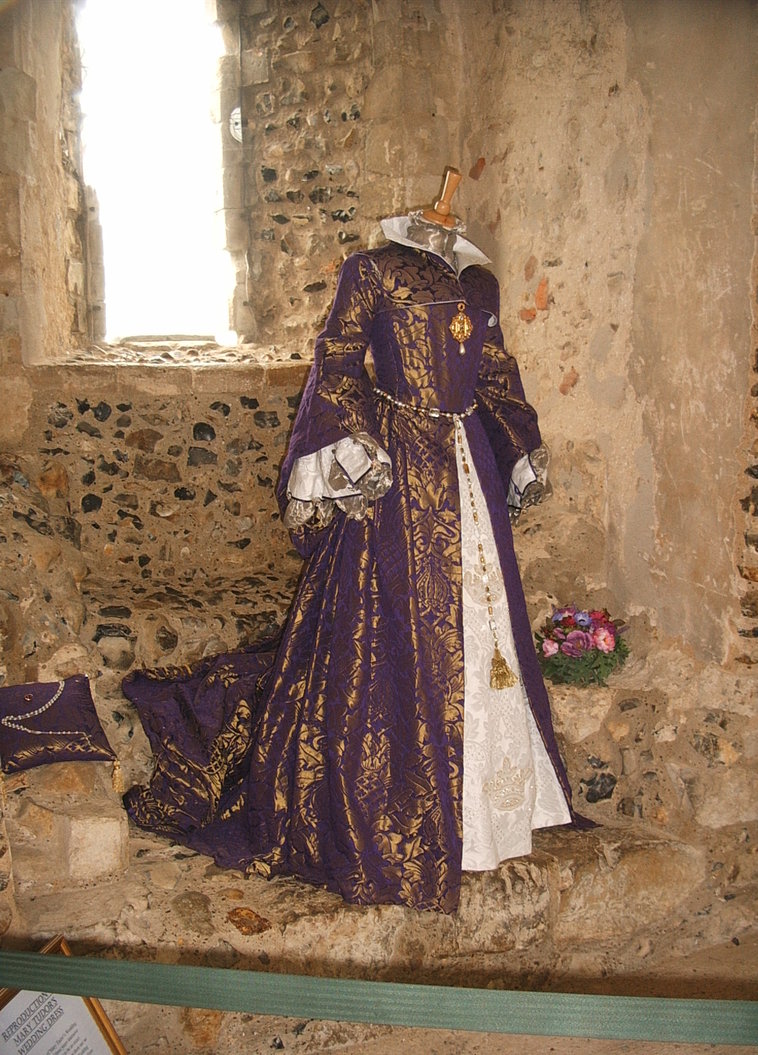
Mary had spent enormous amounts of time on her wedding dress which was in royal purple and gold; she had even had her soon-to-be husband's outfit sewn as while but his was in white and gold and embroidered. The cathedral itself was richly hung with cloth-of-gold and a scaffold had been erected in the middle (though for a more joyous occasion this time). Behing this stage two chairs had been produced: one for the bride and one for the bridegroom.
The prince entered first under a canopy with Spain's arms on it and then came the Queen accompanied by a large number of noblemen. Her train was carried by the Marquise of Winchester and the ceremonial sword by the Earl of Derby. The service was performed by the bishop of Winchester who was also Mary's Lord Chancellor. Besides him the bishops of London, Ely, Duresme, Chichester and Lincoln were present. It must have seem necessary to underline that Mary was not marrying a mere prince of Spain but also the King of Naples and Jerusalem because the bishop of Winchester held a short speech on the matter. Strangely enough it was Mary who sat on the right side during the ceremony and not her male counterpart - this was a clear signal that it was she who was the ruling monarch and not her Spanish co-regent.
The ceremony was said in both English and Latin (perhaps a compromise?) and then the Marquise of Winchester and the Earls of Pembroke, Bedford and Derby stepped forth to give away the Queen - after all she had no father to give her away and it was symbolically that the entire realm gave her away. After the ceremony the newly wedded couple attended Mass before the great altar. When the rings were securely placed and the treaty signed the congregation all rose and shouted out in happiness, beseeching God to give them joy through this union.
If you want to read a contemporary account of this mayor event (I used it for this post) then follow this link
 |
| This is a replica of Mary's wedding gown |
| Winchester Cathedral where the event took place |
Subscribe to:
Posts (Atom)