Well, we all know that the hygiene was lacking (to say the least) at the court of the Tudors. But it appears from recently discovered documents that the Tudors bathed and washed more than we have thought so far. So, let's take a look at some of the Tudors - who were the clean ones and who skipped their baths?
But strangely enough, Henry VIII defied the health advises from the doctors and bathed! At Hampton Court Palace (Bayne Tower) he had a large tub installed which was the height of what technology could do: it was heated by a stove in the room next door and the hot water was led from there to the King's tub. Henry's wound his leg was constantly aching and the King chose to bathe in a mixture of herbs and musk - attempting to ease the pain.
The King even went so far as to take herbal baths - except when the sweating sickness was out.
Mary, Queen of Scots was also fond of bathing. According to rumours the Scottish Queen liked to bathe in wine!
Also Elizabeth I bathed frequently compared to her courtiers. It is reported that the Queen bathed at least once every month - and to her contemporaries that was almost too much! The Queen's sharpened sense of smell might have contributed to the frequent baths but Elizabeth still joins the league of the "clean" Tudors!
But of course, not everyone followed these royal examples as you can see from the following examples:
Anne of Cleves followed German traditions and hardly ever bathed. When she was engaged to Henry VIII her advisers allegedly had to work hard on convincing Anne that she had to bathe before she met the King.
Besides Henry VIII's bath tub at Hampton Court, the royal family also had access to bath tubs at the Tower and Windsor Castle. Henry VIII actually built yet another bathroom at Whitehall at the end of the 1540's.
Other courtiers would buy soap and scented water to clean their hands and douche their bodies. The very wealthy could even afford perfume to sprinkle on the body in an attempt to get rid off the smell.
Showing posts with label mary. Show all posts
Showing posts with label mary. Show all posts
Wednesday, 20 March 2013

Monday, 4 March 2013
Mary, Queen of Scots - a ghost
It is commonly believed that people becomes ghosts after their death if they had experienced something that would keep them here on earth - like an execution. Therefore it is not strange that Mary, Queen of Scots should also return as a ghost long after her execution.
.jpg) Mary - as the prisoner of Elizabeth I - was moved around between different grand houses. But apparently she did not enjoy all of her grand "prisons". While she stayed at Tutbury Castle, things were suddenly getting a lot worse for the Scottish Queen. As the net tightened on her she was denied the luxuries of walking in the park and even sitting in an especially comfortable chair. Mary probably knew that her fate was sealed when she was eventually moved to Fotheringhay Castle. Perhaps her anxious months left a mark on these two places: these are the castles in which the ghost of the doomed Queen has been seen.
Mary - as the prisoner of Elizabeth I - was moved around between different grand houses. But apparently she did not enjoy all of her grand "prisons". While she stayed at Tutbury Castle, things were suddenly getting a lot worse for the Scottish Queen. As the net tightened on her she was denied the luxuries of walking in the park and even sitting in an especially comfortable chair. Mary probably knew that her fate was sealed when she was eventually moved to Fotheringhay Castle. Perhaps her anxious months left a mark on these two places: these are the castles in which the ghost of the doomed Queen has been seen.
At Tutbury Castle many visitors have seen her ghost wearing a white gown - the number of witnesses is very unusual in cases of "ghost sightings". In another incident - still at Tutbury Castle - she has been seen walking across the grass - this time wearing a black dress.
After her terrible execution, Fotheringhay Castle was no longer inhabited. The original wooden staircase was built into what is now Talbot Hotel. It was this very staircase that Mary walked down on the day of her execution - it is also here that her ghost has been seen most at her last location.
At Tutbury Castle many visitors have seen her ghost wearing a white gown - the number of witnesses is very unusual in cases of "ghost sightings". In another incident - still at Tutbury Castle - she has been seen walking across the grass - this time wearing a black dress.
After her terrible execution, Fotheringhay Castle was no longer inhabited. The original wooden staircase was built into what is now Talbot Hotel. It was this very staircase that Mary walked down on the day of her execution - it is also here that her ghost has been seen most at her last location.
Sunday, 17 February 2013
Elizabeth and Mary: Cousins, rivals, queens

The drama that played out between Queen Elizabeth I of England and Mary, Queen of Scots is still as fascinating to us now as it was 500 years ago. The two queens - who never met - embarked on a lethal rivalry that would only have one winner. A rivalry that would send Mary, Queen of Scots to the scaffold and leaving Elizabeth as the undisputed Queen of England.
In this book the very drama of these two women is played out not only through the two front-figures but by the power and ambition of the men that surrounded both monarchs.
Not Becoming of A Christian Princess
It is - and was - not a secret that Princess Mary and Prince Edward did not see eye to eye on religious matters but as it turns out, the siblings had different views on royal behaviour.
Prince Edward wrote to Catherine Parr, asking her to keep the Princess Mary from dancing foreign and exotic dances. In his own words Mary should "attend no longer to foreign dances and merriments which do not become a most Christian Princess." You can almost imagine Mary's indignation towards being reproved by her younger brother on her behaviour.
Despite personal pride, Mary may also have found a sort of comfort in the foreign dances since her mother had brought many Spanish and "Moorish" dances to the English court when she arrived to marry Arthur, Prince of Wales.
Prince Edward wrote to Catherine Parr, asking her to keep the Princess Mary from dancing foreign and exotic dances. In his own words Mary should "attend no longer to foreign dances and merriments which do not become a most Christian Princess." You can almost imagine Mary's indignation towards being reproved by her younger brother on her behaviour.
Despite personal pride, Mary may also have found a sort of comfort in the foreign dances since her mother had brought many Spanish and "Moorish" dances to the English court when she arrived to marry Arthur, Prince of Wales.
Tuesday, 12 February 2013
Hair of a Tudor
.jpg)
The hair in the locket to the left belongs to Mary Tudor, who was Queen of France for a short while. Born as a Tudor, Mary was the daughter of Henry VII and Elizabeth of York - consequently making her the sister of Henry VIII and Arthur. The hair is the notorious Tudor-red that is said to have been a trademark of the Tudors - both Henry VIII and Elizabeth I were famous for their copper-red hair.
The hair was taken from Mary's tomb in 1784 on September 6th when her tomb at St. Edmundsbury was opened for the first time ever since it was interred after Mary's death.
In the shadow of the crown

This book by Jean Plaidy tells the story of Mary I and her way to the throne - a way where she had to go through almost all sorrows imaginable.
The Last Boleyn

This book focuses on Mary Boleyn who was the last Tudor after the execution of her sister and brother (Anne and George) and the consequent death of both her parents - she was also the Boleyn who ended up defying the rules and marrying out of love.
Monday, 11 February 2013
Mary Boleyn, The Other Boleyn Girl
As with her infamous sister, Anne, it is unknown exactly when Mary was born. We do know that Mary was born at Blickling Hall and spent her childhood at Hever Castle with her siblings Anne and George.
It has been suggested that she was the eldest of the three Boleyn siblings because her grandson (Lord Hunsdon) claimed the title of Earl of Ormonde on the grounds that the title belonged to him since he was a descendant of the eldest Boleyn heir. Furthermore she married first - which is normally reserved for the eldest girl. But there are no actual evidence that can tell us which sister was the eldest.
It has been suggested that she was the eldest of the three Boleyn siblings because her grandson (Lord Hunsdon) claimed the title of Earl of Ormonde on the grounds that the title belonged to him since he was a descendant of the eldest Boleyn heir. Furthermore she married first - which is normally reserved for the eldest girl. But there are no actual evidence that can tell us which sister was the eldest.
Sunday, 10 February 2013
Mary I's Psalter
This Psalter was made in the 13th century but it is unknown what happened to it until 1553 where the customs officer Baldwin Smith presented it as a gift to Queen Mary I.
Mary valued the book highly and had it rebound with her device, the pomegranate, which she had adapted after her mother. The pomegranate is sewn with golden thread on a velvet background.
The Psalter is far from the ordinary Psalters. It contains many illuminated parallels - all done by the same artist. The book contains more than 800 illustrations that are beautifully executed. The clasps are engraved with Tudor emblems of fleur-de-lis, portcullis, a lion and a dragon - this was to make it clear that it was the Queen's personal belonging.
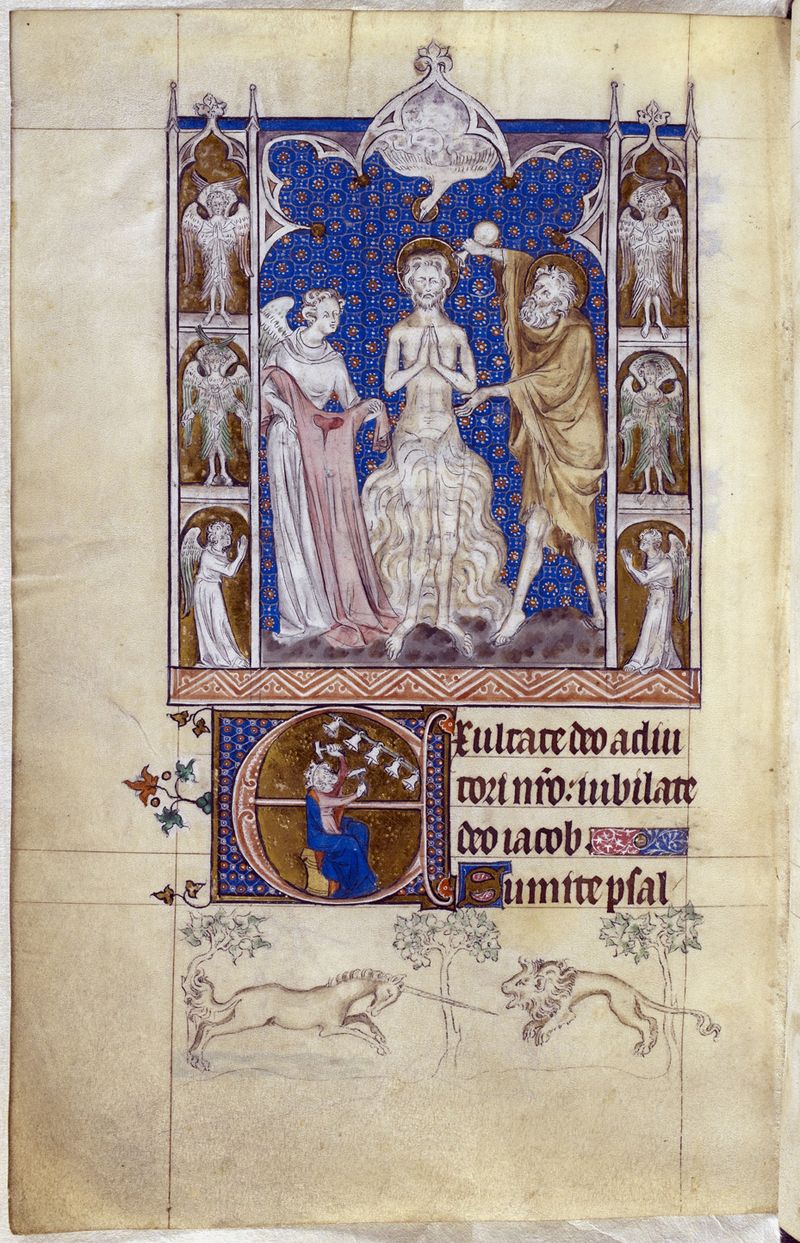
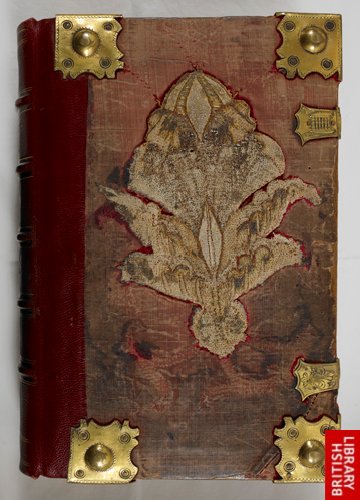
Mary valued the book highly and had it rebound with her device, the pomegranate, which she had adapted after her mother. The pomegranate is sewn with golden thread on a velvet background.
The Psalter is far from the ordinary Psalters. It contains many illuminated parallels - all done by the same artist. The book contains more than 800 illustrations that are beautifully executed. The clasps are engraved with Tudor emblems of fleur-de-lis, portcullis, a lion and a dragon - this was to make it clear that it was the Queen's personal belonging.
Subscribe to:
Posts (Atom)